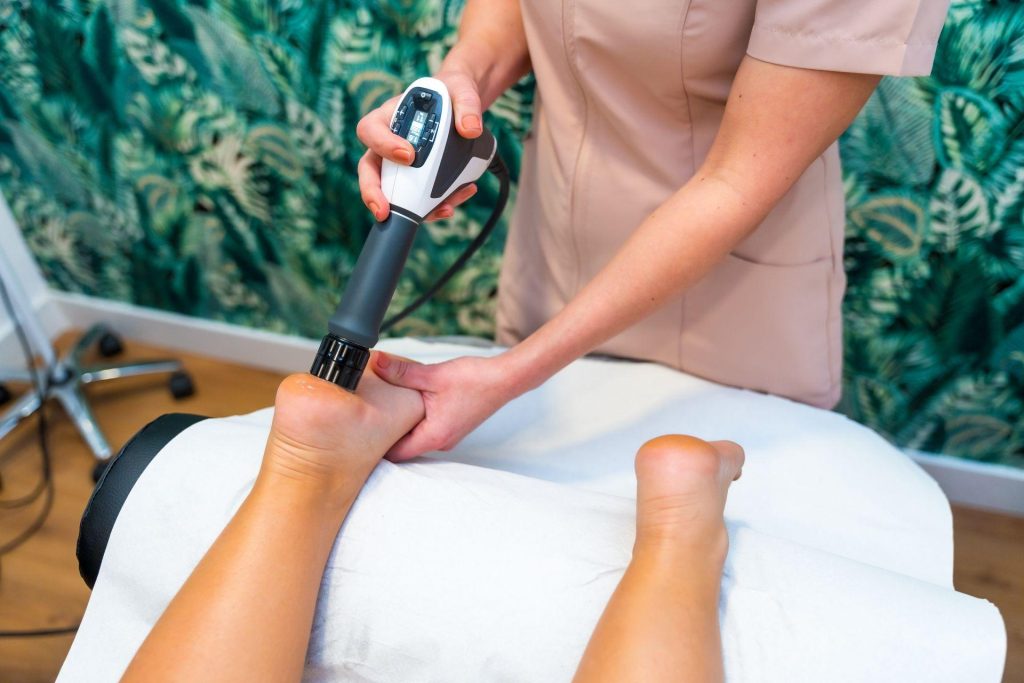
Radial Shockwave Therapy at Wise Chiropractic
A new approach to healing, movement, and feeling your best
Move with greater confidence. Get back to the activities you love. Support your body’s natural capacity to heal.
At Wise Chiropractic, we believe that health is about more than simply being free from pain. It’s about moving comfortably, staying active, enjoying everyday life, and having the freedom to do the things that matter most to you.
That’s why we’re excited to introduce Radial Shockwave Therapy — a non-invasive treatment option designed to support recovery from certain persistent tendon and soft-tissue conditions.
Whether heel pain is making your morning steps difficult, elbow pain is interfering with your favorite activities, or a nagging tendon problem is keeping you from exercising, radial shockwave therapy may be an option worth exploring.
Our goal is to help you understand your options and find a care approach that supports your individual health and movement goals.
What is radial shockwave therapy?
Radial shockwave therapy, also known as radial pressure wave therapy, uses mechanical acoustic energy delivered through a handheld treatment device to a targeted area of the body.
These pressure waves interact with the tissues, stimulating biological responses involved in tissue remodeling, local circulation, and pain modulation. Researchers continue to investigate the precise mechanisms involved, but clinical studies support its use for certain musculoskeletal conditions, particularly persistent tendon and fascia problems.
Unlike surgery, radial shockwave therapy is delivered externally, without incisions. It typically does not require anesthesia or an extended recovery period.
Think of it as another tool to help you move forward — one that may complement chiropractic care, therapeutic exercise, and other appropriate strategies for restoring comfortable movement.
How can shockwave therapy help?
Your body has remarkable repair and adaptation capabilities. However, some tendon and soft-tissue conditions can persist when the demands placed on the tissue exceed its ability to recover.
Radial pressure waves provide a mechanical stimulus that may help influence the body’s local tissue response and the way pain signals are processed.
Potential benefits may include:
- Supporting tissue recovery: Stimulating biological processes involved in tissue remodeling.
- Helping manage persistent pain: Modulating pain sensitivity in the treated area.
- Improving movement and function: Helping make everyday activities and rehabilitation more comfortable.
- Offering a non-surgical option: Providing another treatment to consider before pursuing more invasive approaches, when clinically appropriate.
Individual responses vary. Shockwave therapy does not guarantee healing or pain relief, and it is not appropriate for every condition.
What conditions may benefit?
Radial shockwave therapy is commonly used for selected chronic tendon and soft-tissue problems. At Wise Chiropractic, we can assess whether it may be appropriate for your particular symptoms and goals.
Foot and heel pain
- Plantar fasciitis and persistent heel pain
- Achilles tendinopathy
- Certain cases of heel-spur-associated pain
Elbow and arm pain
- Tennis elbow
- Golfer’s elbow
- Selected tendon-related pain around the forearm
Knee and lower-leg pain
- Patellar tendinopathy, sometimes called jumper’s knee
- Selected cases of shin splints
- Certain muscle-tendon injuries
Shoulder and hip pain
- Selected rotator cuff tendon conditions
- Certain cases of calcific shoulder tendinopathy
- Some tendon-related pain around the outer hip
Not every condition in these categories responds equally well. The best approach depends on your diagnosis, the duration of your symptoms, your medical history, and the treatment options appropriate for you.
What to expect during treatment
We want you to feel informed and comfortable throughout your care. Here’s what a typical radial shockwave appointment may involve.
1. A conversation about your goals
We’ll discuss your symptoms, health history, activities, and what you’d like to get back to doing. We’ll determine whether further evaluation or another type of care is needed before proceeding.
2. A personalized treatment approach
If you’re a suitable candidate, we’ll identify the treatment area and explain the procedure. A small amount of contact gel is applied to the skin to help the applicator transmit the pressure waves.
3. A brief treatment session
The handheld applicator delivers a series of rhythmic pressure pulses to the targeted area. You may feel tapping, pressure, or temporary discomfort. Treatment intensity can be adjusted according to the area being treated and your tolerance.
4. Guidance for recovery
You can generally return to many normal daily activities soon afterward. Temporary tenderness, redness, bruising, or soreness can occur. We’ll provide guidance about activity levels and any adjustments appropriate for your situation.
A course of treatment may involve several appointments, depending on the condition and your response. Your care plan should be individualized rather than based on a one-size-fits-all schedule.
Is radial shockwave therapy right for you?
Shockwave therapy may be worth considering if you’re experiencing a persistent tendon or soft-tissue problem and want to explore additional options.
It may be particularly relevant if:
- Your heel, elbow, shoulder, or another area has been bothering you for some time.
- Pain is limiting your exercise, work, hobbies, or daily activities.
- You’ve tried other conservative approaches but still have symptoms.
- You’d like to explore a non-invasive treatment as part of a broader recovery plan.
An evaluation is important before treatment. Radial shockwave therapy is not suitable for everyone, and certain medical conditions, medications, pregnancy, bleeding risks, recent injuries, or problems in the treatment area may require avoiding treatment or obtaining medical clearance. Please tell us about your health history and all medications you take so we can assess safety.
Our approach at Wise Chiropractic
At Wise Chiropractic, we see care as a partnership.
Our focus is not simply on a painful area, but on helping you work toward the activities and quality of life you value. Depending on your needs, shockwave therapy may be considered alongside other appropriate approaches, such as movement guidance, progressive exercise, and chiropractic care.
We believe in helping you understand what we’re recommending, why it may be helpful, and what realistic progress could look like.
That means looking at the whole picture, setting meaningful goals, and monitoring your response rather than promising a particular outcome.
Frequently asked questions
Does radial shockwave therapy hurt?
You may feel rhythmic tapping, pressure, or some discomfort during treatment, particularly over a sensitive area. The intensity can often be adjusted. Some temporary soreness afterward is also possible.
How many treatments will I need?
The number of sessions depends on the condition being treated, its severity and duration, and how you respond. Several sessions are often used, with progress reviewed along the way. We’ll discuss a suitable plan after your evaluation.
How soon will I notice a difference?
Some people notice a change relatively quickly, while others improve gradually over several weeks. Tissue adaptation and changes in function can take time, and results cannot be guaranteed.
Is there downtime after treatment?
Most people can continue many normal activities. However, you may be advised to temporarily reduce high-impact exercise or activities that heavily stress the treated tissue. Follow the specific guidance provided for your condition.
Can shockwave therapy replace chiropractic care or exercise?
Not necessarily. It may be used as one component of a broader treatment plan. Appropriate exercise, load management, and other care may still be important for recovery and long-term function.
Is it suitable for everyone?
No. A clinical assessment is necessary to identify potential contraindications and determine whether the expected benefits justify the risks for your particular situation.
Take the next step toward moving better
You don’t have to simply accept persistent pain as a normal part of everyday life. Understanding what’s contributing to your symptoms can open the door to new possibilities.
At Wise Chiropractic, we’re here to help you explore your options, make informed decisions, and work toward the activities you enjoy.
Curious whether radial shockwave therapy could be right for you?
Contact Wise Chiropractic to schedule an evaluation or ask our team about this new treatment option.
Wise Chiropractic — helping you move well, live well, and make the most of what your body can do.